

How to Pass FRM Part 1 in Just 90 Days?– My Journey as an SBI Scale 2 Officer
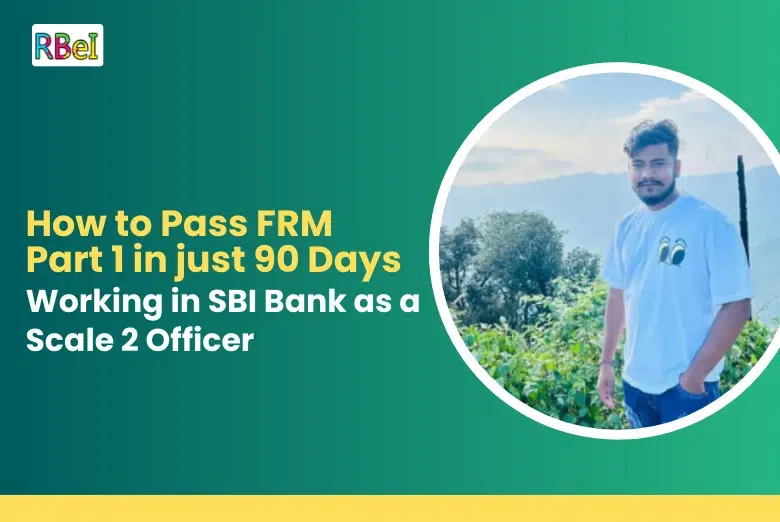
When you are working full-time at a demanding job, preparing for a global finance exam seems like an impossible task. I faced the same challenge as a Scale 2 Officer at SBI Bank, where my daily schedule was already packed with branch operations, compliance targets, and customer interactions. Yet, I had a clear dream—to crack the FRM Part 1 exam within just 90 days and set a strong foundation for my career in risk management. In the world of finance, there are countless resources and coaching institutes, but choosing the right one can completely change the outcome. While searching for the Best FRM Coaching in India, I came across RBei Classes, known for their 94% highest pass rate in India. Honestly, their reviews and teaching style gave me confidence at a time when I was unsure if I could balance my banking job with this demanding exam preparation. At that moment, I had no idea how deeply this decision would shape my journey. Through this blog, I want to share my story, strategies, and insights on how anyone—especially working professionals like me—can pass FRM Part 1 in 90 days, while also answering some of the most common questions students often ask. Why I Decided to Pursue FRM? Working at SBI gave me exposure to credit risk, treasury, and compliance, but I realized that without a strong international qualification, my career growth would be limited. I wanted to move into global risk consulting or financial services, and the Financial Risk Manager (FRM) designation offered by GARP seemed like the most recognized path. I asked myself: Can I manage FRM preparation along with my job responsibilities? That was the biggest question. And the answer came only when I discovered how to manage time effectively and how the right coaching institute could support me. How I Found RBei Classes? – A Turning Point When I started my research, I checked multiple options. Every institute promised results, but I needed something more practical. Unlike fresh graduates, working professionals cannot afford trial-and-error learning. We need focused, structured, and result-oriented guidance. That is when I came across RBei Classes. What caught my attention was: Their 94% pass rate, the highest in India. The unlimited watch views for recorded lectures, allowing me to watch at my own pace. The validity till you pass feature, which gave me peace of mind. Detailed lectures that simplified difficult topics. Difficult mocks and the best practice set, which made the final exam feel easier. And most importantly, the personal mentorship from Deepak Goyal Sir. Deepak Sir’s approach is very practical. What stood out for me was his availability—whenever I had doubts, he cleared them patiently, whether it was about conceptual clarity in Value at Risk or application-based case studies. His focus on making subjects easier for working professionals gave me hope. My 90-Day Plan to Crack FRM Part 1 Balancing banking work and studies was not easy. I had to use every hour wisely. Here’s the strategy that worked for me: 1. Set Clear Targets The first step was creating a 90-day calendar. I divided the four subjects of FRM Part 1—Foundations of Risk Management, Quantitative Analysis, Financial Markets & Products, and Valuation & Risk Models—into weekly chunks. Every Sunday, I reviewed my progress. 2. Daily Routine Morning: 1 hour of lecture revision before going to the bank. Evening: 2–3 hours after work, focusing on problem-solving. Weekends: 6–7 hours for practice sets and mock exams. 3. Using the Best Practice Set The best practice set provided by RBei was significantly tougher than the actual exam. Initially, I felt it was too difficult, but later I realized this was their strength. When I finally appeared for the test, I found myself calm and confident because I had already practiced tougher problems. 4. Unlimited Recorded Lectures Since recorded lectures at RBei are available with unlimited watch views, I often revised quantitative topics two to three times. For a working professional, this flexibility is priceless. 5. Mock Tests and Mentorship The personalized mentorship by Deepak Sir helped me identify weak areas. He guided me to focus on concepts rather than blindly memorizing formulas. This strategic approach brought me into the top quartile in all subject areas. The Roadblocks I Faced Life never goes smoothly in banking. During my preparation: There were audits at the branch, leaving me too tired some nights. Unexpected family functions disturbed my schedule. Sometimes, I simply felt demotivated. But every time I fell behind, I reminded myself why I started this journey—to open doors to global opportunities. And with support from RBei and my own discipline, I kept going. Why RBei Classes Felt Different? I compared notes with friends studying at other coaching institutes, and here’s why I felt RBei Classes is the Best FRM Coaching in India: Clarity of Concepts – Topics like probability distributions, derivatives, and VaR felt simpler. Accessibility – Deepak Sir was always approachable for doubts. Structured Learning – Recorded videos + live doubt sessions made learning organized. Unlimited Views and Extended Validity – Perfect for someone juggling work and studies. Community Support – Fellow aspirants shared tips and kept the motivation alive. Unlike other institutes that only provide videos, RBei provides a study ecosystem. The Result – FRM Part 1 and Beyond With this plan, I cleared FRM Part 1 in just 90 days. Later, I also attempted FRM Part 2 and achieved top quartiles in all six subjects, again with the guidance of RBei Classes. Eventually, this global qualification and my banking experience helped me secure an opportunity with PwC in Risk Consulting. This was a huge milestone in my career, which all started with the right decision at the right time. Why Recorded Lectures Are the Best for Working Professionals Recorded lectures fit into my unpredictable banking schedule. On late evenings when I was free, or early mornings when the branch was yet to open, I could revisit topics at my own pace. Since lectures at RBei come with validity till you pass, I never feared losing access. This made it a far better option than classroom-based programs with limited schedules. Key Takeaways for Aspirants Plan Strategically – 90 days is possible with discipline and structured targets. Choose the
Why to Choose RBei Classes for FRM Preparation?

When I started preparing for the FRM exam, the first question that came to my mind was – which is the Best FRM Coaching in India? Being a full-time Branch Manager in Bank of India, Delhi, my schedule was already packed with long working hours, client meetings, and never-ending responsibilities. Managing time for studies was always a challenge. However, today, as I write this blog after clearing FRM Part 2 in my first attempt with top quartiles in all six subjects, I can confidently say that choosing RBei Classes was the best decision I made. In this blog, I want to share my personal journey of FRM preparation, how I discovered RBei Classes, why I believe they truly provide the Best FRM Coaching in India, and how the unique teaching style of Deepak Goyal Sir helped me succeed. Also Read: FRM Course Duration, Eligibility, Syllabus and Fees How I Started My FRM Journey? Working in the banking sector for several years gave me a good exposure to finance, risk, and compliance. Yet, I always felt the need to upskill myself with a globally recognized qualification. That is when I came across the FRM certification. I still remember sitting late at night in my office in Delhi, reading about how FRM can open doors to risk management, consulting, and investment management roles worldwide. The more I read, the more I realized that FRM was the perfect fit for my career aspirations. But then came the real challenge: how do I prepare? With my hectic job, I needed flexibility. Live classes were not practical for me because timings would clash with my work. Self-study felt risky because FRM is not an exam where you can rely only on notes; you need proper guidance. That’s when I started looking for the Best FRM Coaching in India. How I Found RBei Classes? During my research, I noticed that many coaching institutes were offering FRM courses. Some promised short videos, some focused only on providing notes, while others lacked personal mentorship. However, I wanted more than that. I wanted detailed lectures, practical examples, and most importantly – guidance from someone who had experience in the industry and teaching. That’s when I came across RBei Classes. What caught my attention was their 94% pass rate in India – the highest among all FRM coaching institutes. Honestly, numbers don’t lie, and this immediately made me curious. As I explored further, I saw that Deepak Goyal Sir was the face behind RBei. His background, teaching approach, and student success stories made me feel connected. I read about how he focuses on practical knowledge instead of just textbook theories, and that was exactly what I wanted. Without a second thought, I decided to enroll with RBei Classes, and today I am grateful for that decision. You may also like to read: Courses After 12th Commerce With High Salary Why RBei Classes is the Best FRM Coaching in India? There are several reasons why I strongly believe RBei is the Best FRM Coaching in India. Let me break it down: 1. Unlimited Watch Views and Validity Till You Pass This feature is something I did not find anywhere else. With my work schedule, I could not commit to fixed class timings. Sometimes I would study at 11 PM, sometimes early morning before heading to the branch. With RBei’s recorded lectures, I had unlimited watch views, and the validity was till I passed. This took away all the pressure of rushing through topics. 2. Detailed and Easy-to-Understand Lectures The Best FRM Lectures and Notes I received were extremely detailed yet simple to understand. Even the most complex risk management models were explained with practical, real-world examples. I could immediately relate the concepts to my banking experience. 3. Personalized Mentorship from Deepak Sir This is what truly makes RBei stand out. Despite being a recorded class format, Deepak Sir was always available for doubt solving. I could message him anytime, and he would patiently explain the concepts. His mentorship was not just about academics; he also guided me on how to manage time, how to approach mocks, and how to stay motivated. 4. Tough Mocks for Better Preparation The mock tests were harder than the real exam. At first, I found them challenging, but soon I realized their importance. They prepared me for every possible scenario. On the actual exam day, I felt more confident because I had already practiced tougher questions. 5. Focus on Practical Knowledge Unlike other coaching institutes that only focus on syllabus coverage, RBei Classes emphasize practical application. Deepak Sir would connect every topic to real-world financial cases, which not only helped me understand concepts better but also made me a better professional. Also Read: How to Become Investment Banker After 12th My Preparation Journey with RBei Classes Balancing work and studies was never easy. There were days when I came home exhausted after a 10-hour shift at the bank. Yet, I found the energy to sit for at least 2–3 hours at night and go through the lectures. What helped me most was the flexibility of recorded classes. I followed a simple strategy suggested by Deepak Sir: Watch lectures and make short notes. Revise after every two topics. Attempt mock papers regularly. Never leave practice for later. Why RBei Classes is Better than Other Coaching Institutes? Many students ask me why I chose RBei over others. Let me put it simply: Other institutes give you limited access. RBei gives validity till you pass. Other institutes provide short notes. RBei gives Best FRM Lectures and Notes in detail. Other institutes are transactional. RBei offers personalized mentorship. Other institutes may focus only on theory. RBei focuses on practical knowledge. In short, RBei Classes provides everything a working professional needs to succeed. The Result – A New Career at BlackRock After clearing FRM, opportunities started opening up for me. The highlight of my journey was when I got an offer from BlackRock in Gurugram. It felt surreal – from
Full Time Working Professional Cracked FRM Part 2 in May – Why I Chose RBei Classes

Hello, my name is Monika Singh. I work as a Branch Manager at Bank of Baroda in Mumbai, and I recently cleared FRM Part 2 in May. Today, I want to share my journey because I know many working professionals struggle with the same question I once asked myself: “Can I really manage FRM preparation along with a full-time job?” The truth is, it is tough. But with the right support, it’s not impossible. And for me, that support came from the Best FRM Coaching in India – RBei Classes, which not only guided me but also gave me the confidence to aim higher. With their help, I not only cleared FRM but also landed my dream job as a Risk Consultant at KPMG in Dubai. Also Read: FRM Course Duration, Eligibility, Syllabus and Fees Why I Chose FRM Working as a branch manager meant my daily life revolved around lending, compliance, and customer management. But somewhere deep inside, I knew I wanted to move beyond routine banking into a more global and specialized role. Everywhere I looked, the focus was shifting to risk management. Whether it was credit risk, operational risk, or regulatory compliance, it became clear to me that risk was the future of banking. That’s when I decided – I want to do FRM. But as soon as I made that decision, reality struck: My job required 10+ hours daily. By the time I got home, I was mentally drained. And the FRM syllabus? It looked endless. Still, I didn’t want to give up. How I Found RBei Classes? Like everyone else, I started by Googling the Best FRM Coaching in India. I compared different institutes, watched demo videos, and read reviews. Some had flashy ads, some promised short-cuts, but nothing clicked. Then one evening, while browsing LinkedIn, I came across a post where a candidate shared her FRM success story with RBei Classes. What caught my eye was not just her success but the fact that RBei Classes had the Highest pass rate in India of 94%. That number stuck with me because it was based on results, not just marketing. Read Also: FRM Part 2 Success Story How Sunil Tandon Cracked FRM I decided to try a demo class. Honestly, within 15 minutes of listening to Deepak Sir, I knew I had found my mentor. The way he explained complex concepts with real-life finance examples made me feel: “Yes, I can do this.” Why I Picked RBei Classes Over Others? Many people ask me, “Why did you choose RBei Classes?” My answer is simple: it suited my life as a working professional. Here’s what made the difference for me: Detailed and easy-to-understand lectures: Topics like derivatives, CDS spreads, and credit risk that I once found scary became manageable. Best FRM Notes and summaries: The notes were concise, updated, and exam-oriented. Perfect for quick revision. Difficult mocks: Honestly, RBei mocks were tougher than the actual exam. But that’s what made the real exam feel easier. Personalized mentorship from Deepak Sir: He was always approachable. Whenever I felt stuck, he guided me personally. Recorded lectures: This was a lifesaver. With my hectic job, live classes weren’t always possible. Recorded lectures allowed me to study at my own pace—late at night, early morning, or even during weekends. I can confidently say, without these, I wouldn’t have managed to balance work and study. My Study Routine Balancing a full-time job and FRM prep was not easy, but I built a simple routine with Deepak Sir’s help: Morning (1 hour): Quick revision before office. Evening (2 hours): Watch recorded lectures and solve practice questions. Weekend (6–7 hours): Mock tests and detailed analysis. The key was consistency, not long hours. Even if I studied just an hour daily, I stayed focused. And because the lectures and notes were so well-structured, I never wasted time searching for resources. Clearing FRM Part 2 By the time exam day arrived, I had completed multiple mocks, revised notes thoroughly, and practiced countless questions. Of course, I was nervous, but I also felt prepared. When the results came, I remember staring at my screen in disbelief – I had cleared FRM Part 2 in my first attempt! It was a proud moment not only for me but also for my family and colleagues. But what followed was even more life-changing. My Dream Job at KPMG, Dubai Clearing FRM gave me the credibility I always wanted. Within months, I received an offer from KPMG in Dubai for the role of Risk Consultant. This was everything I had dreamed of: global exposure, challenging projects, and a platform to grow my career beyond India. The FRM certification opened the door, but the way I prepared—with the BestFRM Coachingin India, RBei Classes—made that door accessible. Even today, when I sit in high-level discussions about credit risk models or operational risk frameworks, I silently thank myself for choosing RBei. Why I Recommend RBei Classes? Looking back, I can clearly say that RBei Classes was the best decision of my career. Their 94% pass rate, Best FRM Lecturesand Notes, difficult mocks, and personalized mentorship set them apart from every other institute. For working professionals like me, the flexibility of recorded lectures made all the difference. I could learn at my own pace without missing a single concept. And the motivation from Deepak Sir kept me going even on the toughest days. My Message to Future FRM Aspirants If you are a working professional and still wondering whether you should pursue FRM, my answer is: Yes, you absolutely should. Don’t let your job become an excuse. With the right coaching, you can balance both. And if you ask me where to prepare from, my honest answer will always be – RBei Classes, the BestFRM Coaching in India. Because if they could help me, a full-time branch manager, crack FRM and land a dream job at KPMG Dubai, they can help you too. 1. Is FRM possible for working professionals like me? Yes,
CFA Salary (2024–2025): The Only Guide You Need to Make a Smart Career Decision

If you’re comparing the Best CFA Course, choosing the right CFA Coaching, or shortlisting a practical CFA Course, you’re probably asking one core question: What is the real CFA salary—by role, by market, and by experience—right now? In this deep-dive, you’ll get a current, data-backed view of pay across regions, roles, and seniority, plus simple actions to improve your earning power. Moreover, you’ll learn how course quality, coaching, and skill-building translate into compensation so you can choose wisely and avoid guesswork. Because this article is focused entirely on CFA salary, it will be unusually detailed; however, it will still read naturally and help you move from curiosity to clarity fast. CFA Salary at a Glance (Why This Guide Matters) Although salaries vary widely by geography, function, and seniority, several 2024–2025 patterns are clear: Global medians remain strong in front-office roles. For instance, CFA Institute’s 2024 compensation study shows portfolio management, trading, and relationship management among the best-paid functions in major markets. In the US, senior hedge fund PM roles had the highest median total compensation among PM focus areas, with sell-side fixed-income leading research medians. Canada and the UK show a similar hierarchy (portfolio management and trading among the top), though medians differ by focus area; furthermore, Canada exhibits less dispersion within functions than the US, while UK buy-side fixed income leads research medians. China (as a key APAC market in the study) reflects overall lower medians than the US/UK/Canada but retains the same role hierarchy: PM and trading rank high. India snapshot (from market data sources): entry roles like Financial Analyst and Equity Research Analyst cluster around ₹6–7 lakh typical annual total pay, with top quartiles reaching into ₹10–16 lakh in metros; moreover, specialized or senior roles (e.g., portfolio roles) rise well beyond that. These numbers, while crowd-sourced, mirror what you’ll see in actual hiring funnels. Because compensation is a moving target, you should anchor decisions to reputable sources and current market listings, and you’ll find those below. Additionally, if you’re evaluating the Best CFA Course, the right CFA Coaching, or any comprehensive CFA Course, align what you learn with high-paying functions and in-demand skills—that alignment tends to compound your pay over time. You may also like to read: Top 5 High Salary Courses After 12th Commerce in 2025 What Drives CFA Salary? (The Big Levers You Can Control) Even though macro factors affect everyone, your compensation depends mostly on a few controllable levers: Function and seat: Portfolio management, trading, and client-facing roles often out-earn back-office roles at the same seniority, primarily because they link directly to P&L and AUM. Market and city: New York, London, and certain Canadian metros show higher medians; in India, New Delhi and Mumbai typically offer higher ladders versus Tier-2 cities. Seniority and impact: Compensation scales sharply from analyst → associate → VP → PM/CIO, with incentive pay growing faster than base. Quant and data skills: Buy-side/sell-side research with quantitative or fixed-income specialization commands notable premiums due to scarce, technical skills. Negotiation timing: Most pay jumps occur at job changes or promotion cycles, not at annual reviews—so preparation before transitions matters. Consequently, your CFA Course plan and CFA Coaching choice should intentionally build toward the functions and skills that pay best. Global CFA Salary Trends (2024–2025) United States (macro benchmark) Key takeaway: Portfolio management and trading remain top earners; senior hedge fund PM medians lead PM pay; sell-side fixed income leads research medians. Why it matters to you: Even if you work in India, the US acts as a compensation bellwether for global finance, especially for hedge funds, multi-asset, and quant roles. Canada Key takeaway: PM, trading, and relationship management dominate; dispersion is less than in the US; Calgary’s senior-professional median outpaced other metros in the dataset United Kingdom Key takeaway: Equity PM had the highest median total compensation among UK PM focus areas in the study, with buy-side fixed income topping research medians; London concentrates most roles. Mainland China (as a key APAC market in the study) Key takeaway: PM and trading still rank high, although medians are comparatively lower than US/UK/Canada medians. Where the CFA Institute report shines is in its quartile bands and role-by-role breakouts. Use it to calibrate your expectations for total compensation (base + bonus + LTIs), not just base salary. India CFA Salary: Reality Check (2024–2025) While India isn’t a “key market” section in the CFA Institute executive summary, we can triangulate from live market data: Financial Analyst (India): Typical total pay ~₹6.6 lakh, with a mid-to-upper range into ₹10–16 lakh, depending on firm and city. New Delhi—Financial Analyst: Average around ₹6.7 lakh, with a range roughly ₹4.5–10.5 lakh. Mumbai—Financial Analyst: Average total pay around ₹7 lakh; typical range ₹4.45–10.5 lakh. Equity Research Analyst (India): Typical around ₹7 lakh; 75th percentile can break ₹12–13 lakh and the high end can be ₹16–27 lakh at select firms. CFA-designated roles (Delhi samples): Crowd-sourced snapshots suggest ranges expanding into ₹10.8–31 lakh in consulting/finance verticals, especially post-charter with relevant experience. Treat these as directional. “CFA” title vs actual role: A “CFA” is a charter/designation, not a job title. Therefore, focus your search on roles (Research Analyst, Fixed-Income Analyst, Equity Analyst, Risk/Quant, Portfolio Analyst/Manager) to see realistic pay ladders. For a city-specific plan, you can cross-check live medians against recruiter salary guides (e.g., Michael Page tools) before you negotiate. Salary by Role (What Each Seat Typically Pays) Note: The CFA Institute report lists total compensation quartiles for specific functions and focus areas (PM, Research, Consulting) across key markets. Use the examples below as a directional map and always localize with current market data before negotiating. Portfolio Management US senior hedge fund PM median led PM focus areas (~$415k), with wide dispersion due to incentive-driven pay. UK PM: Equity PM showed the highest median among PM focus areas, while fixed income showed a higher top quartile; that implies substantial upside for strong performers. India PM-proximate roles: Published crowdsourced data vary widely; however, assistant/associate PM roles and buy-side analyst roles
FRM Coaching – Your Complete Career Guide to Becoming a Financial Risk Manager
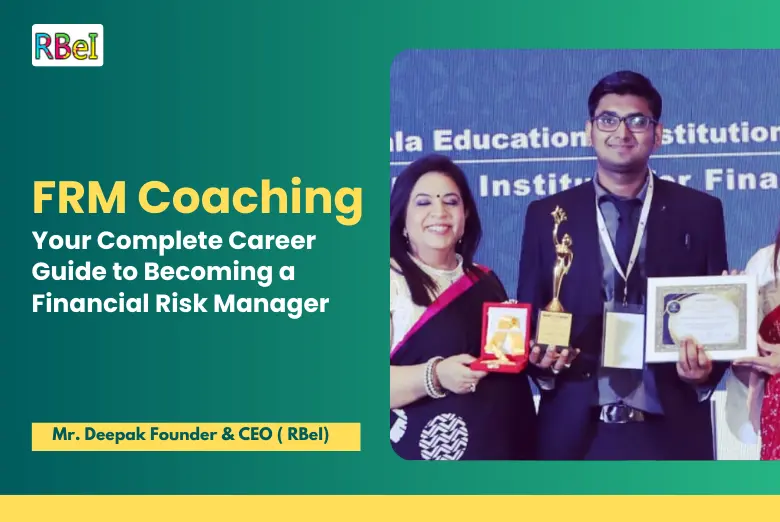
If you’re planning to build a career in finance, FRM Coaching is one of the smartest investments you can make. The Best FRM Course prepares you for a globally recognized qualification that opens doors to high-paying and prestigious roles in risk management, investment banking, corporate finance, and more. Understanding FRM Exam Cost, FRM Exam Dates, FRM Salary, FRM Job Opportunity, and FRM Course Duration is crucial before you begin your journey. At RBei Classes, we guide students step-by-step to clear FRM exams efficiently and confidently — even if they are starting from scratch. What is FRM and Why is it Important? The Financial Risk Manager (FRM) designation, offered by the Global Association of Risk Professionals (GARP), is the gold standard in risk management education. Whether you are a finance student, a working professional, or someone planning a career switch, FRM equips you with skills in market risk, credit risk, operational risk, and investment risk management. Employers across top banks, asset management companies, hedge funds, and consulting firms actively seek FRM-certified professionals because they bring specialized expertise in identifying, assessing, and mitigating financial risks. In today’s volatile market environment, this skill set is not just valuable — it’s essential. Areas of Study in the FRM Course The FRM curriculum is comprehensive and designed to ensure you have both theoretical knowledge and practical application skills. FRM Part 1 covers: Foundations of Risk Management Quantitative Analysis Financial Markets and Products Valuation and Risk Models FRM Part 2 covers: Market Risk Measurement and Management Credit Risk Measurement and Management Operational Risk and Resiliency Liquidity and Treasury Risk Management Risk Management and Investment Management Current Issues in Financial Markets At RBei Classes, we simplify these complex topics using real-life case studies, practical examples, and exam-focused notes so that students not only pass but also understand how to apply the concepts in real-world finance. Job Opportunities after FRM An FRM certification opens doors to multiple industries and positions. Here are some common roles FRM holders take up: Risk Analyst or Risk Manager Investment Banking Associate Credit Risk Analyst Market Risk Analyst Treasury Manager Portfolio Manager Quantitative Analyst Top recruiters include JP Morgan, Goldman Sachs, HSBC, KPMG, Deloitte, PwC, and Citibank. With the growing demand for risk management professionals, FRM-certified candidates often enjoy faster promotions, better job security, and global career mobility. Best FRM Coaching – Why RBei Classes Leads the Way While self-study is possible, the FRM syllabus is vast and can feel overwhelming without proper guidance. This is why choosing the Best FRM Coaching is crucial. Why RBei Classes? Expert faculty with years of FRM teaching experience Concept clarity through simple, real-world examples Flexible learning — live online classes, recorded sessions, and doubt-solving support Structured study plans to cover the syllabus in time for the exam Mock tests and performance tracking Affordable fee structure compared to other institutes We have trained hundreds of successful FRM candidates across India, and our results speak for themselves. FRM Exam Cost and Important Dates Before you enroll, it’s important to understand the FRM Exam Cost: Enrollment Fee – One-time payment of USD 400 (around ₹33,000) when you first register. 2. Part 1 Exam Fee – USD 600 to USD 1,000 (₹50,000 to ₹83,000) depending on when you register (early, standard, or late). 3. Part 2 Exam Fee – Same as Part 1. FRM Exam Dates 2025 (Tentative): FRM Part 1: May, August, November windows FRM Part 2: May and November windows Booking early saves you money and gives more time to prepare. FRM Salary in India and Abroad FRM-certified professionals enjoy lucrative salaries. In India – Average salary ranges from ₹8 lakh to ₹20 lakh per annum depending on experience. Abroad – Salaries often exceed USD 90,000 annually, with bonuses for top performers. Salaries also vary based on the role, location, and industry, but one thing is clear — the ROI on FRM Coaching is very high. FRM Course Duration Most students take 1.5 to 2 years to complete both FRM levels. However, with the right coaching and disciplined preparation, it is possible to clear faster. Can I Clear FRM Level 1 in 3 Months? Yes, it’s possible — but it requires focused study, proper guidance, and a disciplined schedule. At RBei Classes, we have helped students achieve this by providing: Concise study notes Chapter-wise video lectures Weekly revision tests Time management strategies for the exam If you can dedicate 3–4 hours daily and follow a structured plan, clearing FRM Level 1 in 3 months is achievable. What if I Fail FRM? Failing FRM is not the end — many successful professionals didn’t pass on their first attempt. You can retake the exam in the next available window. The key is to: Analyze your weak areas Change your preparation strategy Seek expert guidance (if not already doing so) RBei Classes offers personalized doubt-solving and customized study plans for repeat candidates to ensure they pass the next time. Is FRM Easier than ACCA? Yes, FRM is generally considered easier than ACCA in terms of content volume and exam duration. FRM has two levels, while ACCA has 13 papers. FRM focuses specifically on risk management, while ACCA covers a broader accounting and finance syllabus. If your goal is a specialized career in risk management, FRM is the faster and more targeted option. Final Thoughts – Choosing the Right Path with FRM Coaching Pursuing the FRM certification is a career-changing decision. With the Best FRM Coaching like RBei Classes, you get the knowledge, strategies, and confidence to succeed. Whether you’re aiming for high-paying FRM job opportunities, preparing for FRM Exam Dates in the coming year, or calculating the FRM Exam Cost for your budget, planning ahead is essential. At RBei Classes, our mission is simple — help you clear the FRM exams in the shortest time with maximum clarity and confidence. With expert mentoring, proven strategies, and continuous support, your FRM journey will not just be a qualification — it will be the launchpad for your dream finance career.
FRM Salary: Complete Career Guidance with Best FRM Course, FRM Coaching, and FRM Course Insights
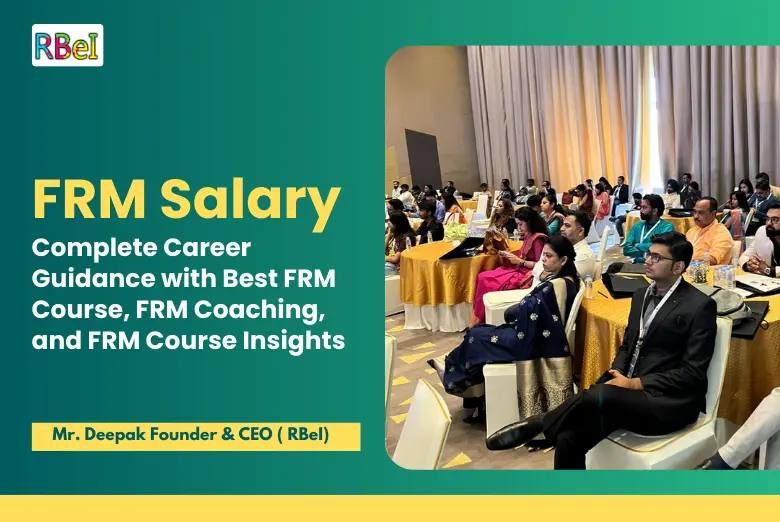
If you are planning to build a strong career in risk management and finance, understanding the FRM Salary potential is one of the first steps to making a wise decision. Choosing the Best FRM Course, enrolling in effective FRM Coaching, and following the right FRM Course curriculum can directly influence your earning potential and career growth. In today’s competitive job market, the FRM designation is not just a certificate—it’s a gateway to high-paying global opportunities, career stability, and professional recognition. This blog will guide you through FRM salaries across roles, countries, and experience levels, while also helping you select the Best FRM Course and coaching program to maximize your earning potential. Understanding the FRM Salary Landscape Before diving into numbers, it’s essential to understand why FRM Salary figures are often higher compared to many other finance certifications. The Financial Risk Manager (FRM) certification, offered by the Global Association of Risk Professionals (GARP), is recognized in over 190 countries. This global acceptance means that professionals with FRM credentials are in demand across industries like banking, investment, insurance, consulting, and fintech. Moreover, risk management has become a priority for organizations post-2008 financial crisis and, more recently, during global market uncertainties. As a result, FRM holders enjoy competitive salaries, faster promotions, and greater job security. Factors Affecting FRM Salary While the FRM credential itself boosts your earning potential, several factors determine the exact FRM Salary you might earn. 1. Experience Level Entry-Level (0–2 years): In India, fresh FRM-certified professionals can expect salaries ranging from ₹6–10 lakhs annually. In the US, the range is $70,000–$90,000. Mid-Level (3–7 years): Salaries jump to ₹12–20 lakhs in India and $90,000–$130,000 in the US. Senior-Level (8+ years): Senior risk managers, heads of risk, or chief risk officers can earn ₹25–50 lakhs in India and $150,000–$250,000+ in the US. 2. Location Global FRM Salary levels differ by region: United States: Among the highest, due to demand in Wall Street banks, investment firms, and hedge funds. India: Rapidly growing demand in BFSI, analytics, and consulting sectors. Singapore, Hong Kong, UAE: Attractive tax benefits and high pay scales for risk professionals. 3. Industry Investment Banking: Highest pay packages due to high-risk portfolios. Commercial Banking: Stable salaries, slightly lower than IB. Fintech & Analytics: Growing demand with competitive pay. Consulting Firms: Lucrative bonuses on top of base salaries. How the Best FRM Course Can Influence Your Salary Enrolling in the Best FRM Course is not just about passing the exam—it’s about building practical skills that make you valuable in the job market. A good course ensures: Concept Mastery: Understanding market risk, credit risk, operational risk, and risk models in depth. Application Skills: Real-life case studies and financial simulations. Exam Strategy: Effective time management and question-solving techniques. By learning from experienced trainers and updated study material, you are more likely to clear both FRM Part I and Part II in your first attempt, which directly accelerates your career growth and salary potential. Role of FRM Coaching in Salary Growth Quality FRM Coaching can be the difference between just passing the exam and excelling in your career. Coaching institutes often provide: Industry insights from experienced risk managers. Networking opportunities with alumni and industry professionals. Guidance on job placements, resume building, and interview preparation. For example, a candidate who joins structured FRM Coaching may secure a better-paying job within months of certification compared to someone preparing without guidance. The return on investment here can be significant—sometimes your first salary increment alone covers the coaching fees. FRM Salary by Job Roles Below is a breakdown of average salaries for popular FRM-certified job profiles: Job Role India (₹ per year) US ($ per year) Risk Analyst 6–10 LPA 70,000–90,000 Credit Risk Manager 12–18 LPA 90,000–120,000 Market Risk Manager 15–22 LPA 100,000–140,000 Operational Risk Manager 12–20 LPA 95,000–130,000 Chief Risk Officer 35–50 LPA 200,000–300,000+ Global FRM Salary Trends The FRM designation opens doors worldwide. Let’s explore salary trends: North America: High salaries with significant performance bonuses. Europe: Strong demand in London, Frankfurt, and Paris. Middle East: Tax-free income and growing finance hubs like Dubai and Abu Dhabi. Asia-Pacific: Competitive pay with rising opportunities in Singapore, Hong Kong, and Sydney. FRM vs Other Finance Certifications – Salary Comparison When compared to CFA, MBA (Finance), or PRM (Professional Risk Manager), FRM often yields comparable or higher salaries in risk-related roles. While CFA focuses more on investment analysis, FRM’s specialization in risk management makes it particularly valuable in today’s volatile markets. How to Negotiate a Better FRM Salary To maximize your FRM Salary: Leverage Your Certification: Highlight your FRM credential in salary discussions. Showcase Practical Skills: Employers value applied knowledge over theory. Stay Updated: Learn new risk technologies and regulations. Consider Global Roles: Relocation can boost your pay by 50–100%. Step-by-Step Guide to Maximizing FRM Salary Choose the Best FRM Course that matches your learning style and career goals. Enroll in Quality FRM Coaching to ensure you clear both parts quickly. Gain Practical Experience through internships or risk-related projects. Network with Professionals via LinkedIn, events, and alumni groups. Target High-Paying Industries like investment banking or fintech. Continuously Upskill with data analytics, AI in risk, and regulatory updates. The Return on Investment (ROI) of FRM An FRM certification often pays back its cost within 6–18 months of entering the job market. Considering the relatively low exam and coaching costs compared to MBA programs, FRM offers one of the highest ROI in finance. Final Thoughts The FRM Salary potential is more than just a number—it’s a reflection of the skills, credibility, and career opportunities you gain with this globally recognized credential. By choosing the Best FRM Course, investing in quality FRM Coaching, and strategically planning your career moves, you can enjoy both financial rewards and professional satisfaction. Whether you aim to work in a top investment bank, a global consulting firm, or a fintech startup, the FRM designation can help you get there faster and with higher pay. Recent Job Openings in Risk Management Here are some recent and noteworthy job
CFA vs MBA – Which is More Valuable for a Career in Finance?
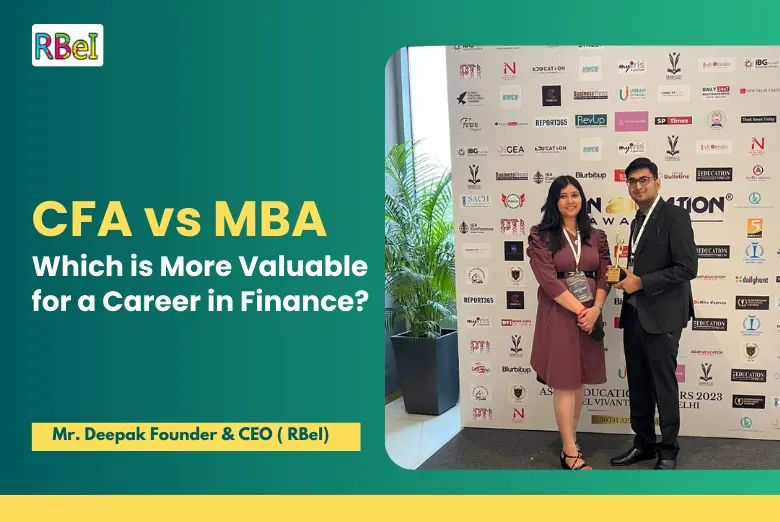
If you are planning a career in finance, one of the most common dilemmas is whether to pursue a CFA (Chartered Financial Analyst) or an MBA (Master of Business Administration). Both are prestigious qualifications, both open doors to exciting job opportunities, and both require a significant investment of time and money. However, the right choice depends on your career goals, budget, learning style, and the specific areas of finance you want to specialize in. In this guide, we will compare CFA vs MBA in detail — covering areas of studies, job opportunities, best institutes, course duration, cost, timings, and ultimately, which one is the best for you. Along the way, we will also discuss best CFA courses, top MBA colleges, CFA exam cost, CFA exam dates, CFA salary, and CFA job opportunities. Understanding CFA and MBA in Finance Before comparing CFA vs MBA, it is important to understand what each qualification offers. CFA (Chartered Financial Analyst) – The CFA program is a globally recognised professional credential offered by the CFA Institute. It is highly specialised and focuses deeply on investment management, portfolio analysis, equity research, corporate finance, and financial modelling. MBA (Master of Business Administration) – An MBA is a postgraduate degree that provides a broad understanding of business administration, management, marketing, operations, and finance. While you can specialise in finance, the curriculum covers many areas beyond just investment analysis. Key difference – CFA is finance-focused, while an MBA provides a broader business education. Areas of Study – CFA vs MBA CFA Areas of Study: Ethics and Professional Standards Quantitative Methods Economics Financial Reporting and Analysis Corporate Finance Equity Investments Fixed Income Derivatives Alternative Investments Portfolio Management and Wealth Planning MBA Areas of Study: Marketing Management Organisational Behaviour Financial Management Operations Management Business Strategy Economics for Managers Accounting for Managers Human Resource Management Entrepreneurship Electives (e.g., Corporate Finance, Investment Banking, International Business) Takeaway: If you are determined to build a career specifically in finance, especially in investment analysis or portfolio management, CFA’s laser focus on finance makes it more valuable. If you want a broader business role with leadership opportunities, MBA might suit you better. Job Opportunities – CFA vs MBA CFA Job Opportunities: Portfolio Manager Equity Research Analyst Risk Manager Credit Analyst Investment Banker (Specialised roles) Asset Manager Wealth Manager MBA Job Opportunities: Management Consultant Investment Banker (Generalist roles) Corporate Finance Manager Marketing Manager Operations Head Business Development Manager Entrepreneur CFA Salary – On average, a CFA charterholder in India can expect between ₹8–15 lakhs annually, while in global markets, it can go well above $100,000 with experience. MBA Salary – Top MBA graduates in India can earn ₹12–20 lakhs annually, with elite B-school graduates earning much higher. Takeaway: CFA gives you strong credibility in finance-specific roles, while MBA opens doors to both finance and broader management roles. Cost – CFA vs MBA CFA Exam Cost: The CFA cost is much lower compared to an MBA. You pay a one-time registration fee of around USD 350–450, and exam fees of USD 940–1250 per level (early or standard registration). Overall, completing all three levels may cost you around USD 3,000–4,000 (₹2.5–3.5 lakhs). MBA Cost: An MBA in India can cost anywhere between ₹10 lakhs to ₹30 lakhs, depending on the institute. For top international MBA programs, the cost can exceed ₹70 lakhs–1 crore. Takeaway: CFA is significantly more affordable than an MBA, making it an excellent option if you want high-quality finance education without spending a fortune. Timings and Duration CFA Course Duration: Most candidates take about 2.5–4 years to complete all three levels. Exams are held multiple times a year — CFA exam dates vary depending on the level. MBA Course Duration: A full-time MBA usually takes 2 years in India, and 1–2 years abroad. Part-time and executive MBA options may take longer. Takeaway: CFA allows you to work while studying, while MBA usually requires a full-time commitment. Best CFA Course and Coaching Choosing the best CFA course is critical to clearing the exams. Look for coaching institutes that offer: Concept clarity Real-life finance examples Flexible learning modes (online/offline) Mock tests and doubt-solving sessions Guidance from experienced CFA charterholders One of the highly-rated options in India is RBei Classes, known for excellent CFA coaching, high success rates, and practical learning. Best MBA Colleges In India, the top MBA colleges for finance include: Indian Institute of Management (IIM) Ahmedabad, Bangalore, Calcutta Indian School of Business (ISB) Hyderabad Xavier School of Management (XLRI) Jamshedpur Faculty of Management Studies (FMS) Delhi SP Jain Institute of Management and Research (SPJIMR) Mumbai Globally, top MBA programs include: Harvard Business School, Wharton, Stanford GSB, London Business School, and INSEAD. CFA Exam Dates The CFA Institute conducts exams multiple times a year. Approximate CFA exam months are: Level I: February, May, August, November Level II: May, August, November Level III: February, August Planning your preparation according to these dates can improve your chances of success. CFA vs MBA – Which One is Best for You? Here’s a quick decision guide: Criteria CFA MBA Focus Finance only Business & Management Cost ₹2.5–3.5 lakhs ₹10–30 lakhs (India), ₹70L+ (abroad) Duration 2.5–4 years (flexible) 1–2 years full-time Entry Requirement Bachelor’s degree or final-year student Bachelor’s degree, competitive entrance exams Global Recognition High in finance industry High in corporate/business world Salary Potential ₹8–15L+ ₹12–20L+ Job Opportunities Finance-specific roles Multiple industries and roles Final Verdict: Choose CFA if you want an affordable, globally respected, finance-specialised qualification and prefer self-paced learning while working. Choose MBA if you want a broader career scope, leadership opportunities, and networking benefits, and have the budget and time for a full-time program. Final Words When it comes to CFA vs MBA, there is no universal winner — only the one that aligns with your goals. If your passion lies in portfolio management, equity research, or investment banking (specialised roles), CFA is a powerful choice. If you aspire to lead companies, explore multiple industries, or start your own venture, MBA might be the better fit. 1. Which
How I Cleared the SCR Exam (Nov 2024) with RBei Classes – A Real Story from SBI Mumbai

A Journey that Transformed My Career in Banking and Climate Risk Clearing the SCR Exam (Sustainability and Climate Risk) in November 2024 was not just another milestone in my career—it was a turning point. As a banking professional working at SBI Mumbai, I always wanted to upskill in areas that aligned with the future of finance. That’s when I discovered RBei Classes, led by the incredible Deepak Goyal Sir, widely known for providing the best coaching for SCR. Their blend of mock exams for SCR, real-world climate finance examples, and personal guidance helped me crack the exam with full confidence. I chose the SCR Exam because of its growing relevance in today’s climate-sensitive financial world. But I stayed committed because of how RBei Classes made learning deeply practical, engaging, and career-focused. And today, I can proudly say I understand Sustainability and Climate Risk like never before—and am now actively involved in SBI’s internal ESG working group. Why I Chose to Pursue the SCR Exam To be honest, I had never considered the SCR Exam until I saw how quickly the landscape in finance was changing. Climate risk isn’t just a buzzword anymore. RBI’s climate stress tests, global net-zero commitments, and ESG regulations are making it crucial for professionals like us in banking to stay relevant. Moreover: It gives an edge in regulatory compliance and risk-based roles. I realized SCR is not just theory—it’s about real, actionable knowledge that applies to PSU and private banking jobs. Above all, it was my way of transitioning from traditional risk roles to climate-centric finance. How RBei Classes Helped Me Succeed in SCR My SCR journey would not have been possible without RBei Classes. Right from the first session, Deepak Goyal Sir simplified the GARP curriculum with relatable industry examples and a strong conceptual base. What made RBei stand out? Personal mentorship and regular check-ins Structured weekly classes and a doubt-clearing system that actually works Practical case studies—we discussed real company ESG reports! A powerful mock exam platform for SCR, with performance analytics Study planners that made it easy to stay on track even with my full-time job at SBI I still remember solving a mock that mirrored the actual exam questions. That day, I knew I was ready. Meet Vedanti Bansal – Another Top Candidate from RBei Classes During my SCR prep, I came across Vedanti Bansal, another aspirant from the same batch at RBei. Her journey was equally inspiring. Balancing her job while preparing, she stuck to the study plan like clockwork. What stood out was her ability to apply SCR concepts in her ESG analyst role. She often said, “Deepak Sir didn’t just teach us to pass; he taught us to think in frameworks.” Today, she’s working in a leading ESG rating firm, and her profile stands out because of her SCR certification, backed by real understanding—not just rote learning. Benefits of SCR Certification for Banking & Finance Professionals Now, let’s talk career. The SCR Exam is not just a certification—it’s a signal to employers that you’re future-ready. Gain deep understanding of climate disclosures, sustainability frameworks, and ESG risks Stand out for roles in compliance, ESG investing, climate risk, and sustainability reporting SCR aligns with the emerging green finance ecosystem supported by SEBI, RBI, and global regulators Opens up global opportunities—firms in Singapore, UAE, and Europe are hiring SCR professionals For someone in banking like me, it’s a direct bridge to climate stress testing, green bond issuance, and policy development roles. Why RBei Classes is the Best Coaching for SCR Exam I explored multiple coaching options before finalizing RBei. But here’s why it’s the best coaching for SCR—no contest. Beyond the syllabus: You get insights into real-world ESG reports, not just definitions Deepak Goyal Sir’s real market experience makes theory come alive A community of like-minded professionals from SBI, HDFC, ICICI, and more Over 100 students have cleared SCR with RBei’s mentorship No PDF dumps. No pre-recorded video fatigue. Just focused, interactive learning that transforms your thinking. My Personal SCR Preparation Strategy – Tips for Aspirants Let me share how I prepared with a full-time job: Divide the syllabus into 3 phases: Fundamentals, ESG regulations, and case studies Use RBei’s SCR study planner—a game-changer Weekend mock exams helped me assess progress Daily 1 hour for reading + 30 mins for concept revision I focused on chapters like Climate Risk Disclosures, ESG Metrics, and Climate Policy Tools My pro-tip: Don’t skip the case studies. They are often where the real learning (and the exam questions) lie. Final Words – My Career After SCR and Why You Should Do It Too After clearing SCR, I was invited to be part of SBI’s Green Finance Task Force. I now work on ESG reporting, climate policy advisory, and sustainable lending frameworks. Honestly, SCR was more than a milestone—it was a transformation. It gave me confidence to speak in internal strategy meetings and contribute meaningfully. If you’re in finance, especially in a PSU or regulatory-focused role, the Sustainability and Climate Risk Exam is your passport to future-readiness. Want to Clear SCR Exam? Join RBei Classes Today! Still thinking? Let me make it easy: Join the next SCR batch at RBei Classes Get free one-on-one guidance from Deepak Goyal Sir Be part of India’s strongest SCR Prep community Don’t wait for your career to catch up to the future. Lead it. RBei Classes is where that journey begins. 1. What is the SCR Course and Who Should Apply for It? The SCR Course, offered by GARP (Global Association of Risk Professionals), stands for Sustainability and Climate Risk Certification. It is designed for professionals working in banking, finance, consulting, risk management, ESG, and sustainability roles. If you are in a role that involves climate risk assessment, ESG investing, green finance, or regulatory reporting, then the SCR certification is ideal for you. Candidates from PSU banks like SBI, private banks like HDFC/ICICI, consulting firms, asset managers, and government institutions are increasingly pursuing this course to stay relevant in a
How I Cleared the SCR Exam While Working Full-Time – Thanks to RBei Classes and Deepak Goyal Sir

From Confused to Certified – My SCR Exam Journey with RBei Classes (Nov 2024) Preparing for the SCR Exam (Sustainability and Climate Risk) felt overwhelming at first. As a full-time banker at SBI Mumbai, juggling work and studies was exhausting. Climate risk terms were new to me, and I couldn’t find the right starting point. I wasn’t sure whether this certification was worth it or even relevant to my banking role. However, everything changed the day I joined RBei Classes and met Deepak Goyal Sir. Their guidance helped me not only clear the exam in November 2024, but also opened doors to real career opportunities in climate risk and ESG roles. I can confidently say this was the best coaching for SCR, and the journey was nothing short of transformational. How It All Started – The Confusion Stage When I first heard about the SCR Certification for Bankers, I didn’t give it much thought. But slowly, I noticed senior colleagues and even RBI circulars starting to focus on climate risk in finance. Terms like green finance, transition risk, and ESG disclosure started popping up in internal training sessions. That’s when I knew – I had to upgrade my skillset. However, I had no idea where to begin. Google was filled with vague articles and GARP’s website didn’t explain much about the actual preparation. I felt stuck. I wanted real guidance, preferably from someone who understood both the banking ecosystem and sustainability concepts. Discovery of RBei Classes – The Turning Point One weekend, while scrolling LinkedIn, I came across a post about RBei Classes and their SCR course. I decided to attend a free webinar by Deepak Goyal Sir. That 60-minute session changed everything. He spoke in plain language, used real banking disclosures from companies like HDFC, SBI, and even BlackRock, and explained the big picture of climate risk in finance. For the first time, I felt I understood the subject. That same night, I enrolled in the batch. The community inside RBei was diverse – from ICICI, Axis, Yes Bank, and even international students. I instantly knew I was in the right place. What Makes RBei the Best Coaching for SCR Exam So, what’s special about RBei Classes? In one word: clarity. Here’s what stood out: Deepak Sir connects theory with reality – Every ESG framework and climate model is explained through real annual reports. Flexible Learning – Recorded videos + weekly live doubt-clearing sessions helped me balance work and study. Mock Exams for SCR – Their mock tests were tougher than the real exam and perfectly aligned with the GARP pattern. Personal Mentorship – I sent direct queries via WhatsApp and got 1-on-1 replies from the team and Sir himself. The entire course was structured, motivating, and result-oriented. Real Impact – How SCR Changed My Understanding of Risk Before this course, risk for me was limited to credit, market, and operational. But today, I think about climate risk, carbon pricing, and TCFD reporting during my daily work. I am now part of an internal SBI team working on ESG data collection and green bond feasibility. Because of this transformation, I’ve also been shortlisted for a new role in the bank’s Sustainability Cell, where SCR knowledge is a must. This is more than a certification – it’s a career accelerator. Meet Shivani Jain – Another RBei Student Who Cleared SCR Let me share the story of Shivani Jain, a colleague I met during the course. She worked at IndusInd Bank and had just returned from maternity leave. Managing a baby and banking job, she thought it was impossible to prepare. But with RBei’s structured planning, she studied in short bursts and cleared SCR in one attempt. Today, she’s working on ESG risk integration in the credit underwriting process at her bank. Shivani’s words: “I wouldn’t have understood climate risk this deeply without RBei. Deepak Sir simplified everything.” Lessons I Learned While Preparing for SCR If you’re planning to take this journey, here are my top takeaways: Start early – Give yourself at least 2–3 months for proper prep. Use GARP official books – But don’t rely on them blindly. Focus on frameworks – Understand TCFD, NGFS, and case studies deeply. Don’t skip mocks – RBei’s mock exams gave me clarity on my weak areas. Think application, not memorization – Climate risk is evolving, so you need to understand, not just pass. Who Should Do SCR and Why – Career Opportunities after SCR If you’re wondering whether this is worth your time, let me break it down: Who should pursue SCR? Bankers working in credit, risk, compliance, or treasury Finance professionals targeting ESG investing or climate strategy roles Consultants aiming to work with green finance clients Anyone preparing for climate-related regulatory frameworks like RBI, SEBI, ECB, etc. Job Roles Post SCR: ESG Analyst Sustainability Risk Manager Climate Risk Consultant Green Bond Structurer Sustainable Finance Advisor Internal ESG Compliance Officer My Final Words – From Self-Doubt to Climate Risk Expert From being utterly confused to becoming confident in explaining climate risk in finance, the SCR journey with RBei Classes was life-changing. It not only made me exam-ready but also future-ready. If you’re even remotely considering the SCR exam, don’t wait. Attend a free session, ask questions, and see the difference yourself. Your career deserves this upgrade. And there’s no better place to begin than RBei under the mentorship of Deepak Goyal Sir. Ready to Crack the SCR Exam? Join RBei’s New Batch Now! Next Batch Starts: [Insert Date] Early Bird Offer: Flat 15% off 1:1 Doubt Clearing Session: Book with Deepak Sir Q1. What is the SCR Exam by GARP? The SCR Exam (Sustainability and Climate Risk) is a globally recognized certification by GARP that equips professionals with practical understanding of climate risk, ESG frameworks, and sustainability in finance. Q2. Who should enroll in the SCR course at RBei Classes? Bankers, risk managers, consultants, and ESG enthusiasts—especially those from regulated entities like banks, NBFCs, or SEBI-compliant firms—should consider SCR with RBei
How I Got a Climate Risk Job in Dubai After 40 with the GARP SCR Certification – A Real Career Pivot Story

How I Built a Global Career in Climate Risk at 43 After Earning My SCR Certification At 43, most people hesitate to change careers. But for me, earning the SCR Certification (Sustainability and Climate Risk) from GARP became the launchpad for something bigger. After two decades with institutions like RBI, SBI, PNB, and Tata Steel, I felt stuck. That’s when I decided to explore the rising world of climate risk. With expert mentoring from Deepak Goyal Sir at RBei Classes, I cleared the SCR exam and everything changed. Today, I work in Dubai as a Sustainability Risk Consultant at First Abu Dhabi Bank (FAB). I also advise startups and banks across the European Union on climate risk and ESG strategies. Here’s my journey—and how SCR Certification unlocked international doors. My Pre-SCR Background – 20+ Years in Indian Finance Sector For more than 20 years, I had a rewarding career in India’s banking and corporate finance sector. I began as a junior analyst at the Reserve Bank of India, then moved through SBI and PNB, handling credit, risk, and treasury roles. Eventually, I joined Tata Steel, managing risk reporting and investment monitoring. Despite this experience, I started noticing a shift in the industry. Global institutions were rapidly integrating climate risk and ESG disclosures into their frameworks. Yet, I had no formal exposure to these subjects. I realized: the future of risk management was sustainability risk, and I had to catch up—fast. Why I Chose the SCR Certification at 43 By 2023, it was clear that traditional risk roles were evolving. Banks, insurers, asset managers—all were looking for talent in climate risk management. I came across the Climate Risk Certification by GARP, known globally as SCR. It promised exactly what I needed: deep, practical understanding of climate-related financial risks. But I knew self-study wouldn’t work. That’s when I joined RBei Classes and started learning from Deepak Goyal Sir, whose teaching style blends textbook concepts with real-world relevance. And that decision became the turning point of my career. RBei Classes – Coaching That Goes Beyond the Syllabus The coaching at RBei was unlike anything I had experienced. It wasn’t just about passing the SCR exam—it was about becoming a practitioner. We studied climate risk modeling, regulatory frameworks, and real case studies from European banks, RBI, and Asian Development Bank. Deepak Sir shared actual green bond term sheets, TCFD-aligned disclosures, and NGFS transition scenarios. His mock exams were almost identical to GARP’s real test structure. Most importantly, he mentored me on how to position myself as a senior candidate aiming for international roles. How the SCR Certification Opened Global Doors for Me After passing the SCR exam in November 2024, I added the credential to my LinkedIn. Within three months, I received an interview call from First Abu Dhabi Bank (FAB)—a top bank in the Middle East actively building its ESG team. They were hiring a Sustainability Risk Consultant for their Wholesale Banking Division. My combination of Indian risk experience and fresh SCR knowledge gave me a strong edge. In March 2025, I relocated to Dubai, joining FAB with a 55,000 AED/month package, housing, and full relocation benefits. My Role at First Abu Dhabi Bank – Real Impact in Climate Risk At FAB, I lead initiatives that truly make a difference: Designing and implementing ESG risk frameworks across corporate lending Advising clients in energy, shipping, and real estate on climate-linked disclosures Collaborating with risk, credit, and compliance teams to align with TCFD, ISSB, and EU Taxonomy Creating internal models for physical and transition risk scoring This isn’t just about policy—it’s about building a more sustainable financial system. Consulting European Clients – My Side Hustle Turned into Purpose Beyond my full-time job, I now consult for startups and mid-sized firms across Germany, France, and Netherlands—remotely via Zoom. They need help with: ESG KPI design Climate scenario planning Climate risk disclosures Thanks to the SCR Certification, I charge €200/hour for this consultancy—far more than my previous salary in India. The certification gave me not just technical skills, but global credibility. Why SCR is the Future – Especially for Mid & Senior-Level Professionals The world is moving fast toward net-zero and sustainability-linked finance. As a result: Banks and PSUs are creating ESG risk roles Insurers need climate risk modelers Consulting firms want sustainability advisors RBI and SEBI are mandating ESG disclosures In this landscape, the GARP SCR Certification becomes your gateway to global ESG roles, especially if you already have a finance or risk background. It fills the exact knowledge gap needed today. A Note to Fellow Professionals – It’s Never Too Late to Pivot If you’re over 40 and wondering whether it’s “too late” to upskill—trust me, it’s not. I was 43, had never studied climate science before, and didn’t even know what NGFS stood for. But with the right coaching at RBei Classes, I learned, passed, and built a second innings of my career. You don’t need to quit your job. Just give 6–8 hours a week with focused learning. If I could rebuild from scratch, you can too. The career after SCR is real—and full of international potential. Join the Next SCR Batch at RBei – Your Global Career Awaits If you’re serious about getting into climate risk jobs, don’t wait. Attend a free demo session by Deepak Goyal Sir New batch starting soon for Nov 2025 SCR Exam Personalized mentoring for Indian and international job roles Connect with alumni already placed in Dubai, Singapore, and EU ESG teams 1. What kind of job opportunities are available in Dubai after completing the GARP SCR Certification? After completing the GARP SCR Certification, professionals can apply for high-demand climate risk and sustainability roles in Dubai. Top banks and financial institutions in the UAE are rapidly expanding their ESG and climate risk frameworks, creating opportunities such as: Sustainability Risk Consultant ESG Risk Analyst Climate Risk Officer Sustainable Finance Associate Risk Manager – Green Finance Dubai’s banking and corporate sector is hiring SCR-certified professionals to align with